


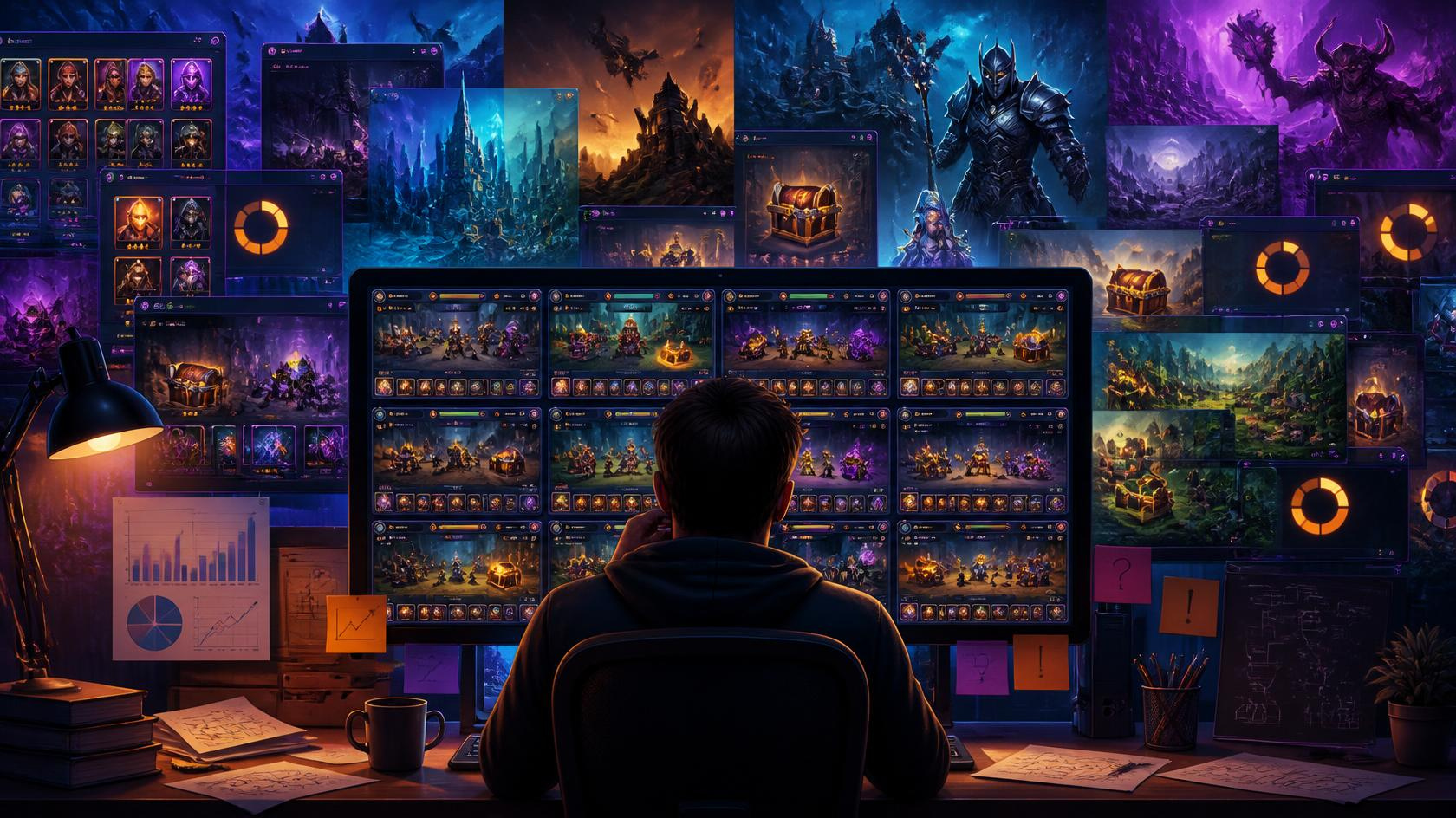
If you’ve opened the Play Store or App Store this year and felt like every other RPG thumbnail shows a character standing in a glowing circle with numbers flying off them, you’re not imagining it. Why so many idle RPG games exist right now comes down to a mix of low development risk, a monetization model that genuinely works, and a play pattern that fits how people actually use their phones. I’ve spent years around mobile game development, and idle RPGs aren’t a fluke or a fad copying each other for no reason. There’s a real business logic behind the flood, and once you see it, you’ll notice it in almost every new release on the charts.
The quick answer
Idle RPGs are cheap to build relative to other genres, they monetize unusually well, and they match the short, scattered way most people play on a phone. Studios keep making them because the ones that land can be extremely profitable without needing console-level budgets or teams.
Background: how we got here
Idle and “AFK” style RPGs aren’t new — incremental games have been around since browser-based clicker games took off over a decade ago. What changed is that publishers figured out how to graft gacha-style collection and progression systems onto that idle loop. Instead of just watching numbers go up, players are now collecting heroes, building teams, and chasing banners, while the game keeps generating rewards even when the app is closed. That combination turned a niche genre into one of the most reliable templates in mobile gaming.
Industry data backs up just how big this got. Mobile RPGs and character-collecting gacha titles bring in roughly $24.5 billion a year globally in consumer spending, and RPGs as a category account for about 28.5% of all mobile in-app purchase revenue worldwide, according to data cited from Sensor Tower and data.ai. That’s a massive slice of the pie for one genre family, and idle-style RPGs are a big part of what’s driving current releases into that category.
As a developer, here’s what I see behind the idle RPG boom
From a studio’s perspective, a few things make idle RPGs an easy pitch to greenlight:
- Lower technical risk. Idle RPGs usually run most of their logic client-side, with simpler backend requirements than a live-service shooter or a real-time PvP game. That means smaller teams and faster builds. Industry guides on idle game development specifically point out these games are “relatively quick to develop” compared to genres that need tight netcode or complex physics.
- Reused systems scale cheaply. Once a studio has a working gacha/progression framework, it’s much easier to reskin it for a new license or setting than to build a fresh combat system from scratch. This is part of why licensed idle games keep showing up — adapting an existing IP into an idle loop takes far less redesign work than building a full action game around it.
- Rewarded ads plus IAP is a proven combo. Idle games lean heavily on rewarded video ads (skip a timer, double a reward) alongside gacha pulls and subscriptions. Because players choose to watch those ads, they tend to tolerate them better than forced interstitials, and some industry estimates suggest rewarded ads alone can add 10-30% to a game’s lifetime value over purchase-only monetization.
- The genre is built for retention. The entire point of an idle RPG is that something is waiting for you when you come back — resources, a chest, a completed timer. That gives players a built-in reason to open the app multiple times a day, which is exactly the kind of habit publishers want. Some reports put idle game “stickiness” (day-over-day return rate) as high as 18%, well above the roughly 10.5% typical of hyper-casual titles.
[TONAY: add your own experience here — e.g. what you noticed firsthand about idle RPG production timelines, team size, or tooling when you were building mobile games yourself]
[TONAY: add your own experience here — your take on whether the genre’s economics are as forgiving as they look from outside, or if there’s a catch most players don’t see]
What it means for players
None of this is inherently a bad thing for the person actually playing. A well-made idle RPG respects your time in a way a lot of other free-to-play genres don’t — you’re not punished for putting the phone down. But it also means the business model is built around getting you to check in often and, eventually, spend on gacha pulls or VIP passes. Tier-1 mobile RPGs hold onto players at a 30-day retention rate around 14.2%, compared to roughly 4% for casual games, which tells you these systems are doing exactly what they’re designed to do. If you’re going into a new idle RPG, it’s worth going in with eyes open about where the free rewards stop and the real monetization push starts, usually somewhere in the mid-game once your first few banners or events show up.
[TONAY: one-line summary of your own experience with idle RPGs as a developer or player — optional, can replace one of the blocks above]
FAQ
Are idle RPGs cheaper to make than other mobile games?
Generally yes relative to genres needing real-time multiplayer, complex physics, or heavy server infrastructure. Idle RPGs typically run most of their logic locally and reuse progression systems across titles, which keeps budgets and build times down.
Is every idle RPG pay-to-win?
Not every one, but most monetize through gacha pulls, VIP tiers, or resource packs, so spending usually speeds up progress. Some titles are more generous with free rewards than others — check a game’s reception on Reddit or the App Store before investing heavily.
Why do so many licensed games (shows, movies, toys) turn into idle RPGs?
Because the format needs less redesign work to fit an existing IP, episodes or story beats can map onto in-game stages, and licensed idle titles have historically charted higher by revenue than by downloads — meaning existing fans are willing to spend even if the game isn’t a huge download hit.
Do you think idle RPGs are oversaturating the mobile charts, or is there still room for new ones to stand out? Let us know in the comments.
Source(s):
Why do so many licensed games go down the idle route? — PocketGamer.biz
How to Make an Idle Game — Adjust
Mobile RPG Statistics 2026 — VoxBooster
Looking for idle RPGs to actually play? Check out our Divine Throne: Idle RPG Codes and Archer Castle: AFK Idle RPG Codes guides.
