

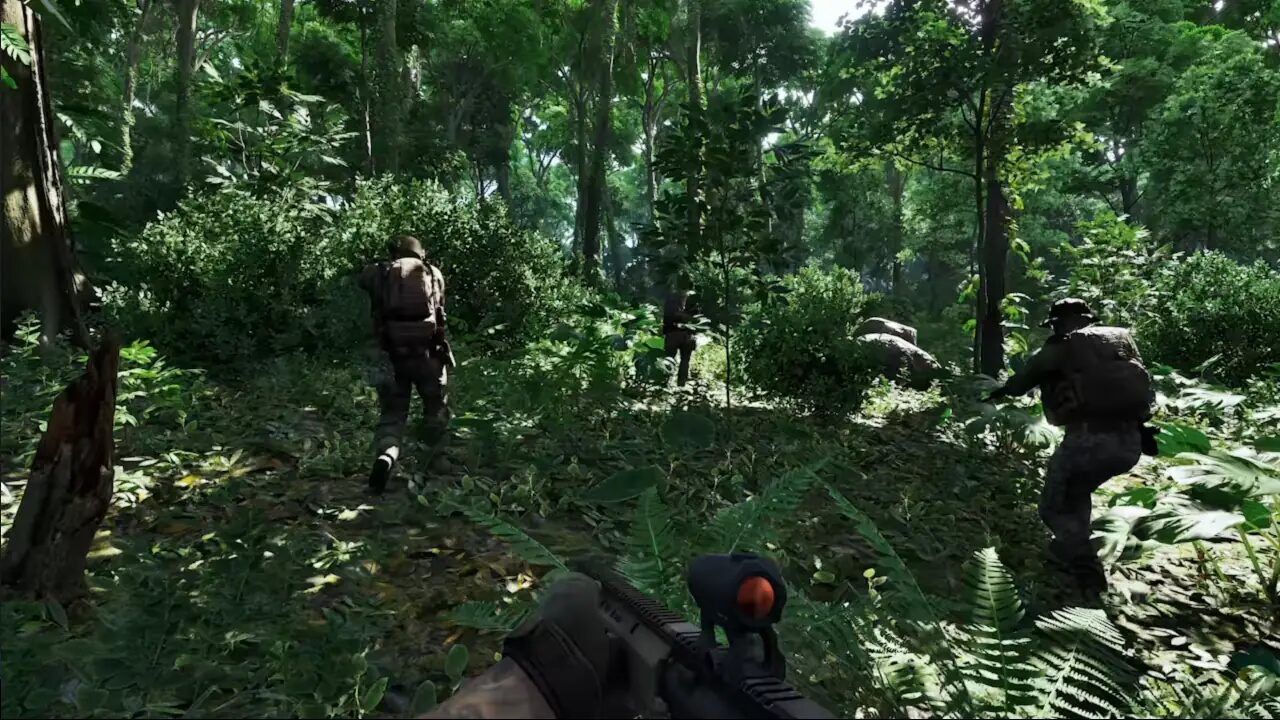
Gray Zone Warfare’s 0.4.2.0 Update Overhauls Player Visibility and AI — Here’s What It Means for You
If you’ve been sleeping on Gray Zone Warfare lately, now might be the time to wake up. The Gray Zone Warfare visibility update 0.4.2.0 dropped in mid-May 2026, and it’s one of the most meaningful mid-cycle patches the game has received since entering Early Access. MADFINGER Games hasn’t just pushed out a handful of bug fixes — they’ve fundamentally changed how stealth works, how the AI behaves, and how the entire loop of infiltrating Lamang feels from moment to moment.
The timing matters too. The game’s major 0.4 “Spearhead” update launched just weeks ago and immediately drove the player count to its highest point since launch, peaking at roughly 43,000 concurrent players. Momentum is building. But with that surge came fresh criticism about the AI becoming too easy to exploit. Patch 0.4.2.0 is MADFINGER’s direct response to that feedback, and from what we’ve seen, they listened carefully.
What the Gray Zone Warfare Visibility Update Actually Does
The New Player Visibility HUD Widget
The headline feature here is something players have been asking about for a long time: a dedicated visibility indicator that tells you, in real time, how detectable you are to enemy AI. The new HUD widget pulls data from multiple sources simultaneously — your position, the lighting conditions around you, your stance, and whether you’re in cover — and translates all of that into a readable display showing how likely nearby NPCs are to spot you. Ipsos
This might sound like a small quality-of-life addition, but in practice it changes everything about how you approach a compound. Previously, stealth in Gray Zone Warfare carried a significant element of guesswork. You’d crouch behind a bush, hold your breath, and hope the patrol didn’t inexplicably lock onto you through a wall. Now there’s a feedback loop. You can see the consequences of your positioning in real time, adjust, and move accordingly.
MADFINGER has been transparent that this is an experimental feature and is actively seeking player feedback on what’s working and what isn’t — which is exactly the kind of developer-community dialogue that helps Early Access games mature properly. It’s a foundation, not a finished product, and the devs know it. GamesRadar+
Darker Nights, Real Consequences
The visibility system ties directly into newly darkened night cycles, which were already demanding but are now significantly more intense. If you’re in the dark, the AI struggles to find you — and the HUD widget reflects that. This creates genuine strategic depth around time of day. Planning your extract around a moonless night suddenly isn’t just flavor; it’s tactically meaningful in a way the game hasn’t fully delivered before. Ipsos
In our experience covering extraction shooters, this kind of environmental integration is rare and valuable. Most games apply a flat detection radius to AI regardless of lighting. Gray Zone Warfare is building toward something more nuanced, and 0.4.2.0 is the clearest proof of concept yet.
AI Behavior Has Been Completely Reworked
Smarter, Faster, More Aggressive NPCs
The AI overhaul in this patch is substantial. Enemy patrols now move with more deliberate strategy when engaging players, their numbers have been increased across the map, and high-tier combatants have received meaningful difficulty increases. Gone are the days of casually clearing entire compounds solo while enemies mill around in confusion — at least for players who know what they’re doing. For everyone else, Lamang just got a lot more dangerous. ZoomInfo
The developers specifically adjusted NPC health states during combat to improve their responsiveness and ensure they follow their intended tactical behavior more reliably. This is a critical fix. One of the more immersion-breaking issues in the 0.4 launch was enemies who would enter a firefight, take a hit, and then seemingly forget what they were doing. That erratic behavior undercut the tension the game is built around. Similarweb
The Balance MADFINGER Had to Find
Not everything in this patch punishes the player. While enemy accuracy has improved across the board, making the game hardcore again in the best possible way, MADFINGER has simultaneously capped how effectively AI can engage players at extreme distances. This is smart design. An enemy that can headshot you from 400 meters through jungle foliage isn’t challenging — it’s just unfair. The patch distinguishes between the two, which is exactly what the community had been asking for. ZoomInfo
Dr Gamez has covered the extraction shooter genre extensively, and the AI balance question is one that almost every game in the space struggles with. Escape From Tarkov has spent years dealing with AI that alternates between braindead and supernaturally accurate. Gray Zone Warfare appears to be threading that needle more deliberately than most, and 0.4.2.0 is evidence that MADFINGER is paying attention to where the frustration actually comes from.
What This Means for the Player Community
The reception from the Gray Zone Warfare community has been largely positive, with particular enthusiasm around the visibility system. For a game whose entire identity is built on the tension between you, the environment, and the enemy, having a clearer feedback loop doesn’t reduce the challenge — it respects the player’s intelligence. You’re not dying less; you’re dying with more information about why.
The developers have confirmed that 0.4.3 is already in development and will continue building on balancing, optimization, and AI improvements, while Update 0.5 is being worked on in the background. The roadmap beyond that includes long-term task visualization improvements, squad task sharing functionality, and deeper stealth mechanics. The visibility system in 0.4.2.0 is clearly just the first step toward something much more comprehensive. Dexerto
The 25% Steam discount running through May 25 is also worth noting for anyone on the fence. MADFINGER launched the sale alongside the patch to coincide with the game’s second Early Access anniversary. For anyone who’s been watching from the sidelines, this is probably the most inviting entry point the game has offered since launch. Dexerto
A Game That’s Finally Delivering on Its Promise
The comparison to Escape From Tarkov is inevitable in any conversation about Gray Zone Warfare, but Dr Gamez has always argued they’re fundamentally different propositions. Tarkov is a PvP ecosystem where the PvE is incidental. Gray Zone Warfare inverts that hierarchy — and that means the quality of the AI isn’t just a balance concern, it’s a core pillar of the experience. When the AI is broken, the game is broken. When it works, Lamang feels genuinely threatening.
Patch 0.4.2.0 is the clearest signal yet that MADFINGER understands this. The visibility system, the smarter patrol behavior, the refined detection ranges — these aren’t independent features. They’re interconnected pieces of an AI ecosystem that, when it all clicks, produces the kind of authentic tension that keeps players coming back.
From what we’ve seen over the last two years of coverage, Gray Zone Warfare has taken longer than many players hoped to reach this point. But the trajectory is undeniable. The 0.4 cycle has done more for the game’s credibility than anything before it, and 0.4.2.0 is the most confident patch in that sequence.
Conclusion: Is the Gray Zone Warfare Visibility Update a Game-Changer?
The Gray Zone Warfare visibility update in patch 0.4.2.0 isn’t just a maintenance release — it’s a statement about what kind of game MADFINGER wants Gray Zone Warfare to be. Smarter enemies, real stealth mechanics, and darker nights that actually matter. The bones of something special have been visible for a while; this patch is the game starting to put on muscle.
If you’ve been away from Lamang since the 0.4 launch, this patch gives you a reason to return. If you’ve never played, the current Steam discount makes right now the best time to find out what all the noise is about.
So here’s the question worth asking: do you think real-time visibility feedback makes extraction shooters more immersive, or does it take away from the tension of never quite knowing whether you’ve been spotted? Drop your thoughts in the comments.
