

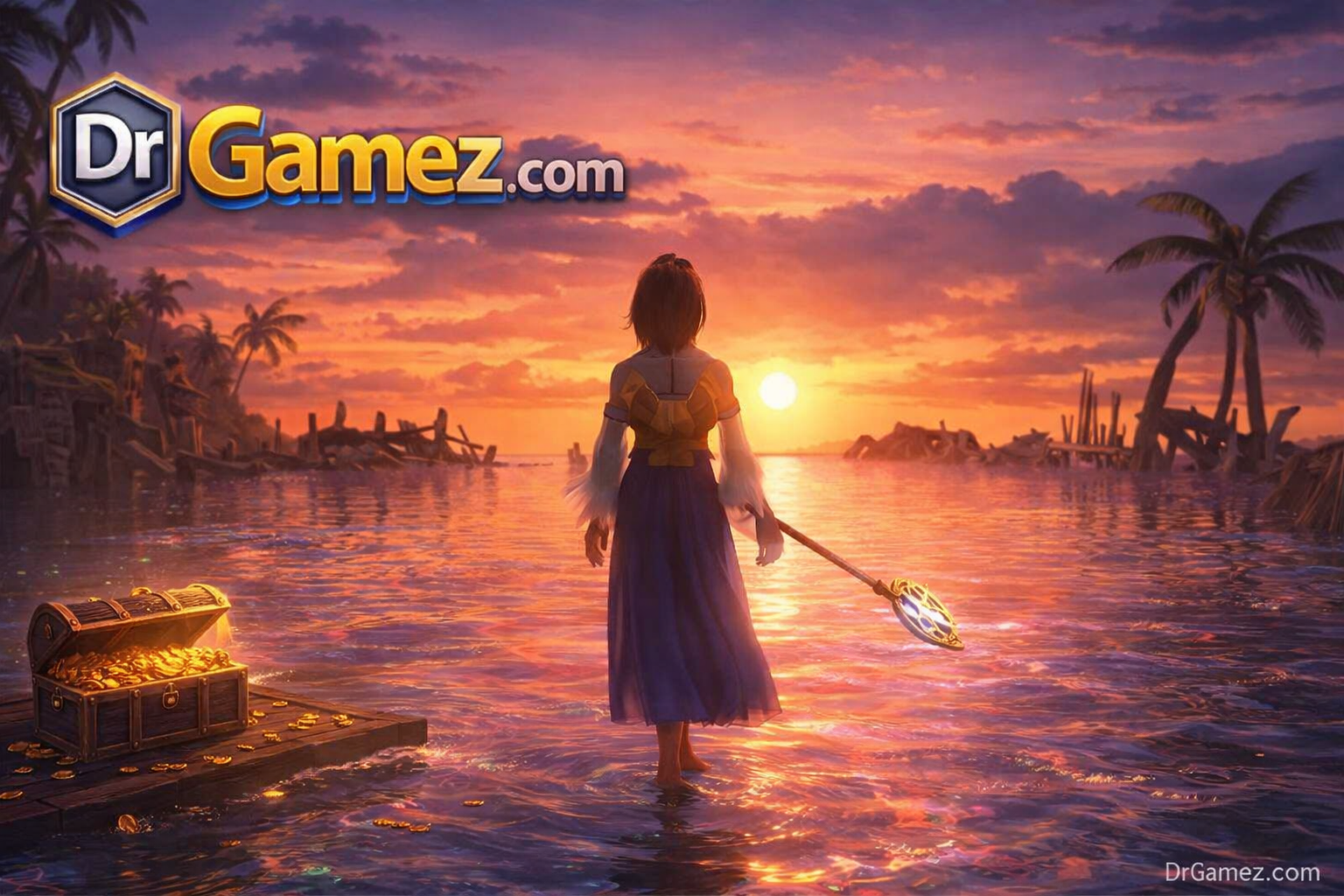
How Final Fantasy 10 Made Jenova Chen Cry — And Why That Moment Gave Us Journey
It’s not often that a JRPG’s emotional gut-punch can be directly traced to the birth of an entirely different masterpiece. But that’s exactly what happened with Final Fantasy 10 and the creator of Journey — one of the most celebrated and emotionally resonant games of the PS3 era. According to a recent interview with Edge Magazine, thatgamecompany founder and CEO Jenova Chen has revealed that weeping over Final Fantasy 10 was among the defining moments that made him want to become a game developer at all. It’s a beautiful piece of gaming history, and it says something profound about why emotionally powerful games matter far beyond the moment you put down the controller.
The Moment That Started Everything: Final Fantasy 10’s Emotional Legacy
Final Fantasy 10 has always occupied a special place in gaming culture. Released in 2001, it was the first mainline entry in the series to feature fully voiced dialogue and a cinematic presentation that felt genuinely film-like for its time. The story of Tidus, Yuna, and their journey across Spira carries one of the most devastating emotional payoffs in the entire franchise — an ending that doesn’t resolve neatly but lingers, unresolved and raw, in the way that only the best fiction does.
It’s worth remembering that Japanese gamers have voted Final Fantasy 10 the most tear-jerking JRPG of all time, and it’s easy to understand why. The central romance is built on an impossible premise from the beginning, which means every joyful moment carries an undertow of grief. By the time the ending arrives, players who’ve invested dozens of hours in these characters feel the weight of it personally — not just narratively.
Chen’s Specific Experience With the Game
What makes Jenova Chen’s account so compelling, as reported in the GamesRadar story drawing from his Edge Magazine interview, is the specificity of the moment. He describes waking up, going to wash his face, and then — entirely without warning — thinking about a character who made a sacrifice for the group in Tidus and Yuna’s story, and suddenly breaking into tears. Not because he was playing the game in that moment, but because the story had taken up residence in his mind and was still working on him long after the screen went dark.
That’s the mark of truly exceptional storytelling in any medium. It doesn’t end when the credits roll. The best stories become part of how you see the world, and Chen articulates this with striking clarity: he describes the feeling as something so beautiful and so melancholy simultaneously that it overwhelmed him without warning.
From Final Fantasy to Film School: How Art Begets Art
Chen draws an explicit and fascinating parallel to the film world to explain what this experience meant to him. He points to Peter Jackson’s origin story — how a young Jackson saw King Kong as a child, was shocked to his core by the image of a giant ape scaling the Empire State Building, and from that single overwhelming emotional experience decided he wanted to make films. The through-line is universal: profound art doesn’t just move you in the moment, it redirects you permanently.
For Chen, Final Fantasy 10 was that King Kong moment. The game didn’t just make him feel something — it showed him what interactive storytelling could aspire to, what it could do to a human being that no other medium could replicate quite the same way.
The Film School Framework Applied to Games
Chen’s film school background is worth dwelling on here, because it gives his insight about Final Fantasy 10 an interesting analytical frame. He references the idea that when a mediocre film ends, audiences leave the theatre chatting and smiling — life resumes immediately. But after a truly impactful film, the audience files out in near-silence, their minds occupied by something larger than the room they’re in.
He describes his experience with Final Fantasy 10 in exactly those terms — a mental state of having been somewhere, of having processed something that changed his perspective on life, not just on games. In our experience covering this industry, very few developers articulate the relationship between emotional impact and creative inspiration this clearly. It’s the kind of insight that explains not just why Journey was made, but why it was made the way it was.
Why This Matters: Jenova Chen, thatgamecompany, and the Legacy of Journey
For anyone unfamiliar with thatgamecompany, a brief recap is overdue. The studio — co-founded by Chen at the University of Southern California — has released a small but extraordinarily influential catalogue of games. flOw demonstrated that games could be meditative. Flower showed they could be genuinely moving without a single word of dialogue. And Journey, released in 2012, became one of the defining games of the PS3 era and one of the most critically celebrated titles of its generation.
Journey is, to put it plainly, the kind of game that makes people cry. Its ending carries an emotional weight that arrives almost without warning, built entirely through music, environment, and an anonymous co-op partnership with a stranger you can’t even communicate with directly. It is, in the language Chen uses about Final Fantasy 10, both beautiful and melancholy at the same time.
The Irony Is Almost Perfect
The connection between Final Fantasy 10 and Journey isn’t just an interesting biographical footnote — it’s a genuinely resonant piece of creative lineage. A game famous for making players weep over a doomed love story and an impossible sacrifice inspired a developer to make games, and those games in turn made an entirely new generation of players weep. The emotional DNA is remarkably consistent across decades and genres.
Dr Gamez has covered numerous developer origin stories over the years, and from what we’ve seen, the through-line from consuming emotionally powerful art to producing emotionally powerful art is one of the most common and underexplored narratives in game development. Miyamoto’s love of exploring the woods near his childhood home gave us The Legend of Zelda. Hideo Kojima’s cinema obsession shaped Metal Gear Solid. And Jenova Chen’s tearful morning after spending time in Spira gave us Journey.
The Wider Conversation: Why Emotional Games Shape Developers and Players Alike
There’s a broader point here that goes beyond one developer’s origin story. The games that make us cry, that linger in our minds when we’re nowhere near a controller, are the ones that justify the entire medium’s claim to be taken seriously as art. Final Fantasy 10‘s emotional impact didn’t just move players — it demonstrably changed the course of game development by inspiring one of the indie era’s most important designers.
This conversation is especially relevant right now. The recent breakout success of Clair Obscur: Expedition 33 has reignited a widespread discussion about JRPGs and emotional storytelling, with that game’s lead writer expressing genuine amazement at being praised by the very Final Fantasy veterans who inspired them. The chain of influence is unbroken and ongoing.
When developers openly credit specific games — and specific emotional moments within those games — as the reason they entered the industry, it validates something that passionate players have always known instinctively: the games that make you feel the most deeply are the ones that matter the most long-term. Not just for players, but for the entire future of the medium.
Conclusion: Final Fantasy 10’s Legacy Is Even Bigger Than You Thought
The next time you’re sitting in silence after a game’s credits roll, unable to quite re-enter the world — that feeling has consequences. In Jenova Chen’s case, the emotional impact of Final Fantasy 10 sent him to a sink in tears and then to a game development career that produced Journey, a PS3 masterpiece that has had the same effect on millions of people who never played a Final Fantasy game in their lives. Emotional art reproduces itself across generations and genres, and this story is one of the purest examples of that dynamic we’ve ever come across.
It also serves as a reminder of what Final Fantasy 10 truly achieved — not just a beloved JRPG with a heartbreaking ending, but a piece of work whose emotional reach extended far beyond its own players, reshaping what games could aspire to be for developers who experienced it.
So here’s the question we’d love to hear your answer to in the comments: which game made you feel something so deeply that it changed how you see the world — and did it inspire anything creative in you? Drop your answer below.
