
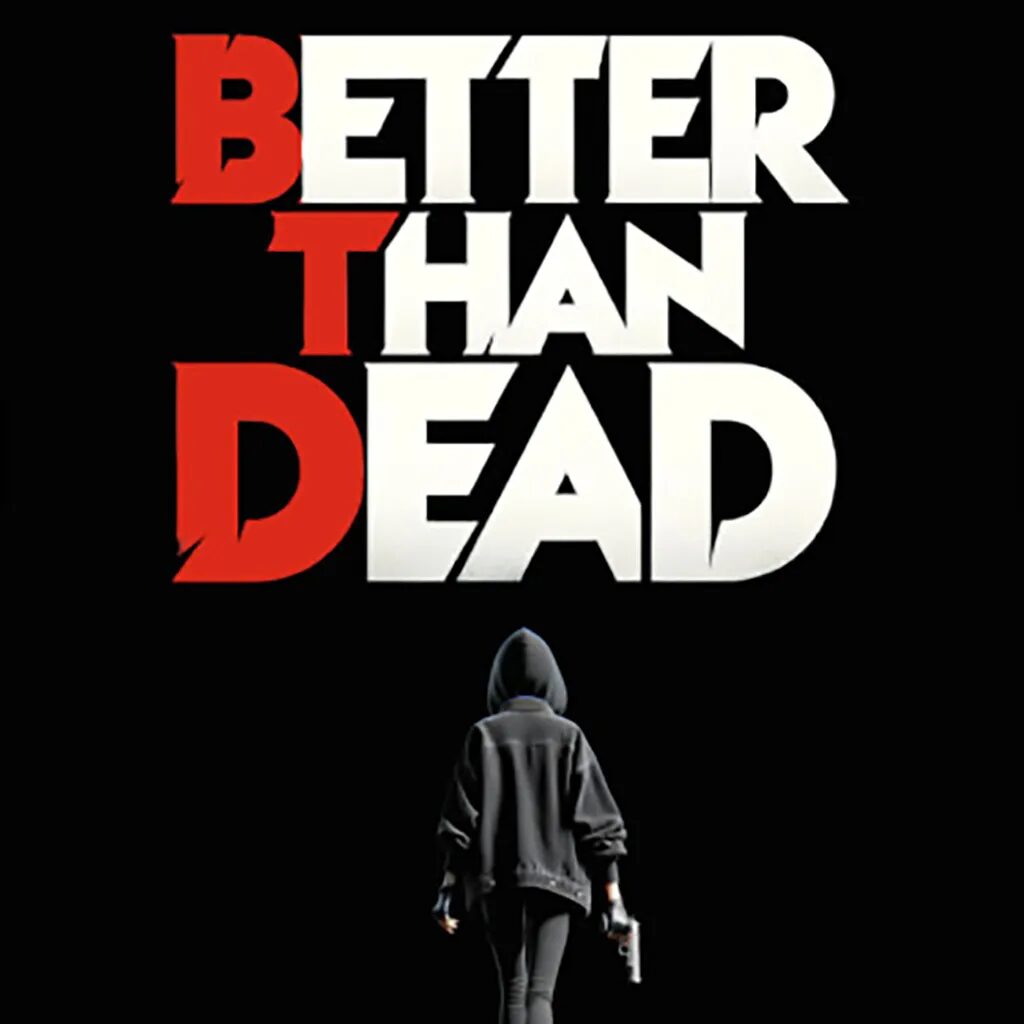
Better Than Dead Early Access Launches on Steam May 12, 2026: The Indie FPS That Wants to Change How You See Combat
The Indie FPS Scene Just Got a Lot More Interesting
The first-person shooter genre has been dominated by the same familiar formulas for years. Polished military shooters, hero-based multiplayer games, extraction titles with battle pass ecosystems — there’s nothing inherently wrong with any of it, but for a certain type of player, the sameness starts to feel suffocating. Where’s the experimentation? Where’s the risk? Where are the games being built by people with something genuinely different to say about what a first-person shooter can feel like?
Better Than Dead is an answer to that question — and as of May 12, 2026, PC players will finally get to find out whether that answer lives up to its promise. The game’s Steam Early Access launch has officially been confirmed, and if the concept behind it is even half as compelling in execution as it is on paper, this is one of the most intriguing indie releases of the year.
What Is Better Than Dead, and Why Should You Care?
A Bodycam Shooter Built Around Immersion
The central design conceit of Better Than Dead is its bodycam perspective. Rather than presenting the world through a traditional first-person camera that gives players a clean, stable, slightly cinematic view of proceedings, the game frames everything as though the player is wearing an actual recording device. The camera sways, jostles, and reacts to movement in ways that feel authentic and disorienting in equal measure.
This might sound like a gimmick, but in practice, the bodycam approach fundamentally changes the emotional texture of first-person combat. It removes the comfortable distance that most shooters create between the player and the violence happening on screen. Everything feels closer, messier, and more real. When you round a corner in a standard FPS, you do so as a camera operator following a protagonist. In Better Than Dead, you do it as a person — with all the anxiety and urgency that implies.
The bodycam aesthetic has been gaining traction in the indie space over the past couple of years, but most titles using it have treated it primarily as a visual style rather than a gameplay philosophy. What sets Better Than Dead apart, based on everything the developers have shared, is that the bodycam perspective is woven into how the game actually plays — how you read spaces, how you process threats, how you make decisions under pressure.
Hong Kong Noir as a Visual and Emotional Framework
Better Than Dead isn’t just mechanically distinctive — it has a specific aesthetic identity that feels rare in the current indie landscape. The game draws deeply from the visual vocabulary of Hong Kong action cinema from the late 1980s and early 1990s. Anyone who has spent time with the films of that era will immediately recognize the vocabulary: neon signs bleeding color onto rain-slicked streets, cramped nightclubs humming with tension, back-alley confrontations bathed in orange and teal.
This isn’t surface-level aesthetic borrowing. The visual identity serves the game’s mood directly. Hong Kong action cinema of that period was obsessed with the weight of violence — the idea that every confrontation carries consequences that extend far beyond the moment itself. Characters in those films moved through danger with a kind of grim purpose, and the best sequences were terrifying precisely because they felt grounded and immediate rather than operatic.
Better Than Dead appears to be channeling that same sensibility. The bodycam perspective reinforces it: when you’re looking at the world through a lens that could be capturing footage for evidence — or for posterity — every decision takes on a different quality.
The Story: Trauma, Identity, and Returning to Something Broken
At its narrative core, Better Than Dead follows a protagonist returning to confront a traumatic past. The details are deliberately sparse, which is the right call at this stage — over-explaining a story before players have experienced it tends to flatten the emotional impact. What matters is the shape of the premise: this is a game about going back somewhere you should have stayed away from, facing something you thought you had moved past, and discovering that the past has no interest in letting you go.
The bodycam mechanic takes on an added layer of meaning in this context. Recording devices in fiction have long been associated with memory — the desire to document, to prove, to preserve moments against the possibility that they might otherwise be denied or forgotten. A protagonist processing trauma through a camera lens is a genuinely evocative concept, and if the writing can match the ambition of the design, Better Than Dead could be one of the more emotionally resonant FPS experiences in recent memory.
Gameplay Philosophy: Tight Spaces, Real Consequences
Designed for Players Who Think as Well as React
Better Than Dead is not designed to be a power fantasy. The emphasis throughout development has been on precision, restraint, and tactical awareness rather than the explosive, movement-heavy combat that dominates much of the genre. The environments are deliberately tight and constrained — not because the team lacked resources to build bigger spaces, but because limited space amplifies tension in ways that open arenas simply cannot.
In a compact environment, every doorway is a decision. Every corner is a potential trap. The luxury of repositioning and regrouping that larger spaces provide is gone, and the game asks you to commit to your choices with full knowledge that a mistake is likely to be punishing. This design approach rewards a different kind of player — someone who reads environments carefully, manages resources methodically, and treats each engagement as a problem to be solved rather than a spectacle to be enjoyed.
The shooting itself, based on available information, emphasizes accuracy and situational awareness over volume of fire. Missing shots isn’t just inefficient — it has tangible consequences for how encounters play out. This creates a rhythm that is more deliberate and considered than most contemporary shooters, and it’s a design philosophy that will appeal strongly to players burned out on chaos for its own sake.
What Early Access Means for This Kind of Game
The Right Model for a Risky Concept
Launching a game as creatively ambitious as Better Than Dead into Early Access is a smart decision, not a hedge. When a game is built around ideas that have never been fully explored in this form before — a bodycam perspective integrated into genuine FPS mechanics, a psychological narrative told through a recording-device framing — player feedback during development isn’t just useful, it’s essential.
The mechanics that feel thrilling in a controlled development environment sometimes reveal friction when tens of thousands of different players approach them from unexpected angles. Early Access gives the team the data they need to understand which aspects of the bodycam experience are landing as intended and which need recalibration. It also gives them the opportunity to expand and refine the story content based on what resonates with the community.
The risk, as always with Early Access, is that some players will encounter the game in a state that doesn’t fully represent what it’s trying to be. Anyone jumping in at launch should go in understanding that they’re participating in a development process, not experiencing a finished product. The upside is that you get to be part of shaping what that finished product becomes — and for a game this unusual, that’s a genuinely interesting position to be in.
What to Expect on Day One
The Early Access build will provide a meaningful slice of what Better Than Dead is — enough to understand the core mechanics, experience the visual identity, and get a sense of where the story is headed. Post-launch updates will add content, address feedback, and gradually build the game toward its full vision. The development team has been clear that this is a process they intend to take seriously, which is the best signal you can get from a studio entering Early Access.
Why Better Than Dead Deserves Your Attention in a Crowded Year
2026 has not been short on notable game releases. Between major franchise entries, highly anticipated sequels, and a steady flow of notable indie titles, there’s more competition for attention than ever. In that context, Better Than Dead has to earn its place — and the argument for it is stronger than it might initially appear.
The bodycam FPS as a fully realized genre is essentially untested territory. Games have flirted with the concept, borrowed its aesthetics, or applied it to horror settings where disorientation is expected. Better Than Dead is attempting something more specific: a story-driven, mechanically precise, narratively serious FPS that uses the bodycam perspective not as a marketing hook but as a fundamental expression of what the game is about. That level of creative commitment from an indie studio is rare and worth rewarding.
If it lands, it will be one of the more memorable FPS experiences in years. If it stumbles, the Early Access period gives the team a genuine opportunity to correct course with community support. Either way, this is a game that’s trying to do something meaningful with the form — and that alone makes it worth following.
Conclusion: May 12 Is the Date to Mark
Better Than Dead arrives on Steam Early Access today — May 12, 2026 — and it carries with it one of the more genuinely interesting premises the indie FPS space has produced in a long time. A bodycam-driven combat system, a Hong Kong-noir visual identity, a story built around trauma and return, and a gameplay philosophy that rewards thought over reflex. These aren’t features bolted onto a conventional shooter — they’re parts of a coherent creative vision that deserves to find its audience.
Whether you’re a lifelong FPS fan looking for something that challenges your assumptions about the genre, or someone who bounced off mainstream shooters and is searching for something with more texture and intention, Better Than Dead is making a case for your time. Head to Steam, add it to your library, and find out for yourself. Then come back and tell us — does the bodycam immersion work as well in your hands as it does in concept? We want to know what you think.
