

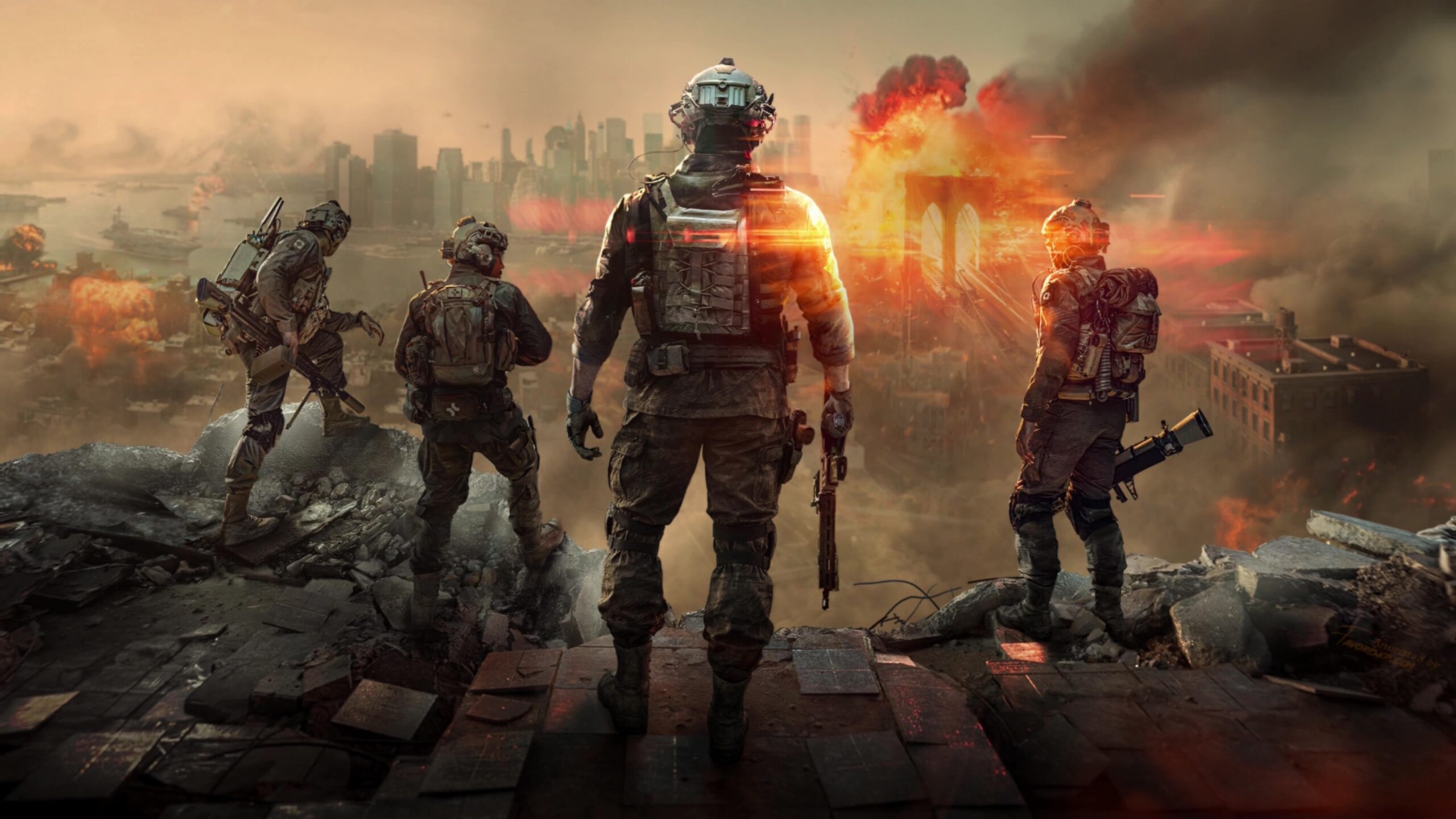
Battlefield 6 Succeeds Yet Developers Face Layoffs: The Dark Side of a Record-Breaking Launch
The Success Story Nobody Expected
Not long ago, the Battlefield franchise was in serious trouble. Battlefield 2042 had become a symbol of everything that could go wrong with a big-budget shooter — a messy launch, baffling design choices, and a community that felt ignored. The brand was bruised, player trust was at an all-time low, and there were genuine questions about whether EA could course-correct fast enough to matter.
Battlefield 6, released in October 2025, was supposed to be the answer. And in many ways, it was.
The game sold over seven million copies in its opening weekend alone, earning the title of the best-selling shooter in the United States for all of 2025. EA’s own financial reports described it as the biggest launch in franchise history. For a series that had spent years rebuilding goodwill, this was validation on a massive scale. The players came back. The critics were largely positive. The comeback narrative wrote itself.
Then, just a few months later, came the layoffs.
Four Studios, One Brutal Announcement
Battlefield 6 wasn’t built by a single team. EA assembled what was essentially a coalition of four internal studios — DICE, Criterion, Ripple Effect, and Motive — to develop the game. Each brought something specific to the table: DICE led multiplayer, Criterion supported both modes, Motive handled single-player, and Ripple Effect worked on an entirely new game mode. The collaboration was ambitious by any standard.
So when EA announced in March 2026 that it was cutting staff across all four of those studios simultaneously, the reaction from the gaming community was one of genuine disbelief.
The company framed the decision as an “organizational realignment” — a phrase that, in corporate language, typically means headcount reduction wrapped in polished packaging. EA stated that the changes were made to “better align teams around what matters most to the community,” and confirmed that all four studios would remain open and continue supporting the game. The exact number of people affected was never disclosed.
That last detail is telling. When a company voluntarily announces layoffs but refuses to say how many people lost their jobs, it usually means the number is large enough to be embarrassing.
Why This Feels Different From Other Layoffs
The gaming industry has unfortunately normalized layoffs to a disturbing degree. Barely a month goes by without some studio announcing cuts, restructuring, or outright closure. In that context, it might be tempting to treat the Battlefield 6 situation as just another item in a long, depressing list.
But this case stands apart for a specific reason: the timing.
These weren’t layoffs after a failed launch. They weren’t cuts to a project that underperformed or a studio that ran out of funding. The developers who were let go had just shipped one of the most commercially successful games of the year. They had redeemed a franchise that most had written off. By any reasonable measure, they had done exactly what was asked of them — and done it well.
The message that sends to developers across the industry is deeply uncomfortable: delivering a hit game does not protect your job. Success is not a safety net. Your value to a large publisher is measured not by what you built, but by whether your role still fits the organizational chart once the launch dust settles.
The Acquisition Shadow
There’s a broader context that helps explain — though not excuse — EA’s decision. The company is currently in the middle of a massive acquisition deal worth around $55 billion, involving the Saudi Arabian Public Investment Fund alongside financial partners. Deals of that scale come with enormous pressure to streamline operations, reduce costs, and present investors with a leaner, more efficient corporate structure.
When you’re heading into an acquisition worth tens of billions of dollars, every redundancy gets flagged. Overlapping roles across four studios working on the same game become an obvious target. That doesn’t make the human cost any less real, but it does explain why this happened right now rather than a year ago or a year from now.
The irony is that the game’s success may have actually accelerated the cuts. Once Battlefield 6 shipped and the heavy production phase ended, the business justification for maintaining four fully-staffed development teams simultaneously became harder to defend on a spreadsheet.
What’s Actually Happening With the Game
For players still in the trenches, the more immediate concern is what these layoffs mean for Battlefield 6’s future as a live-service title.
The post-launch period has been mixed. The initial launch was genuinely exciting, but player numbers on PC have fallen significantly since the peak concurrent figures around release. Steam reviews have drifted toward “Mixed,” with the most common complaints centered on two issues: an aggressive monetization structure and a content pipeline that feels too slow.
The development teams had already acknowledged before the layoffs that producing more than two maps per season was not feasible given their current capacity. Season 2 was also delayed by a month. Now, with an undisclosed number of developers gone across all four studios, there’s a legitimate question about whether the content cadence can improve — or whether it will get worse.
EA’s official position is that Battlefield remains one of its biggest priorities and that the realignment is designed to focus resources on what the community actually wants. That’s a reasonable thing to say. Whether it translates into better, faster content is something players will have to wait and see.
The Live-Service Trap
Battlefield 6 finds itself caught in a dilemma that has become achingly familiar in modern gaming. Publishers build massive games with enormous teams, launch them to great fanfare, then immediately begin shrinking those teams as the product transitions from development to ongoing service. The problem is that players who invest in a live-service game are making an implicit long-term commitment — they expect the game to grow, evolve, and keep delivering reasons to return.
When a publisher visibly cuts the workforce responsible for delivering that content, it doesn’t just reduce capacity. It damages trust. Players start wondering whether the game has a future, whether the roadmap will be honored, whether the investment of time and money they’ve already made will be respected.
Heavy monetization compounds the frustration. If players are being asked to spend freely on cosmetics and battle passes, they expect something in return: regular updates, responsive developers, and genuine engagement with the community. When the content slows down while the storefront stays fully stocked, that relationship breaks down fast.
A Pattern EA Needs to Break
This isn’t the first time EA has found itself in this position. The company has a documented history of cycling through periods of aggressive expansion followed by painful contractions — and the developers who build the games almost always bear the human cost of those swings.
Rebuilding trust with a gaming community is extraordinarily difficult work. The teams at DICE, Criterion, Ripple Effect, and Motive spent years doing exactly that after the Battlefield 2042 debacle. They earned the franchise a second chance. Treating that effort as disposable once the launch window closes isn’t just poor optics — it’s a strategic mistake that makes it harder to attract and retain the kind of talent you need to keep a franchise competitive.
Conclusion: Success Shouldn’t Come With a Pink Slip
Battlefield 6 is still a good game with an active community and a roadmap that, on paper, promises more to come. The franchise is alive, the servers are populated, and there’s genuine potential for it to grow into a long-lasting live-service title if EA makes the right calls going forward.
But the layoffs cast a long shadow. The people who built this game — who rescued a franchise from the brink — deserved better than to become line items in a pre-acquisition cost-cutting exercise. And the community deserves transparency about how these cuts will actually affect the content they were promised.
The ball is in EA’s court. They can prove that “Battlefield is a top priority” means something beyond a press release, or they can let another promising franchise quietly fade. Either way, the gaming community is watching — and taking notes.
Are you still playing Battlefield 6? Do you think EA can deliver on its post-launch promises with a reduced team? Sound off in the comments — we want to hear what the community thinks.
