

The $50 Million Gamble That Saved Borderlands: How a Last-Minute Art Style Overhaul Changed Gaming History
When we talk about gaming’s most consequential creative decisions, the conversation usually lands on things like game mechanics, story direction, or multiplayer design. Rarely does it center on an art style — and almost never on one that was overhauled just two months before a game was scheduled to ship. But that’s exactly what happened with the original Borderlands, and the story of that decision is one of the most fascinating behind-the-scenes tales in modern gaming history. The Borderlands art style change cost Take-Two Interactive $50 million and delayed the game by a full year — and according to company CEO Strauss Zelnick, it was the only reason the franchise became the beloved juggernaut it is today.
What Take-Two’s CEO Actually Said — and Why It Matters Now
In a candid interview with podcaster David Senra, Zelnick opened up about one of the riskiest calls the publisher ever made. With Borderlands roughly two months from its planned release, a senior executive walked into Zelnick’s office and delivered news that would make most publishing executives break into a cold sweat: the game’s art style was wrong — not slightly off, but fundamentally misaligned with what the game needed to be.
The ask was extraordinary. Gearbox Software wanted to scrap the visual direction they’d spent years building and rebuild it from the ground up in an entirely different aesthetic. The cost: approximately $50 million. The timeline hit: an additional year of development. Zelnick chose to greenlight it.
What makes this story resonate right now is the context it provides for how games get made — and unmade — at the highest level. Dr Gamez has covered the industry long enough to know that these kinds of decisions almost never get made, precisely because the financial and logistical pressure to just ship the thing is overwhelming. Most publishers would’ve pushed the game out the door and quietly moved on.
Where Borderlands Came From — and What It Almost Was
The “Brown Period” That Nobody Remembers
When Borderlands first surfaced publicly in 2007, it looked like dozens of other games on the market. Dark, gritty, heavy on the grey-and-brown palette — it was a product of an era that had been shaped by Gears of War, Resistance: Fall of Man, and Fallout 3. The game’s original design language was described internally by the Gearbox team as the “Brown Period,” which is both an accurate description and a quietly devastating one.
From what we’ve seen documented over the years, the team had initially aimed for a tone that sat somewhere between sci-fi realism and retro grittiness — think Mad Max crossed with early Halo, but muted. There was nothing technically wrong with it. But there was nothing right with it either. It was competent without being memorable, and in a market crowded with competent-but-unremarkable shooters, that was a slow death sentence.
The “Purple Cow” Moment
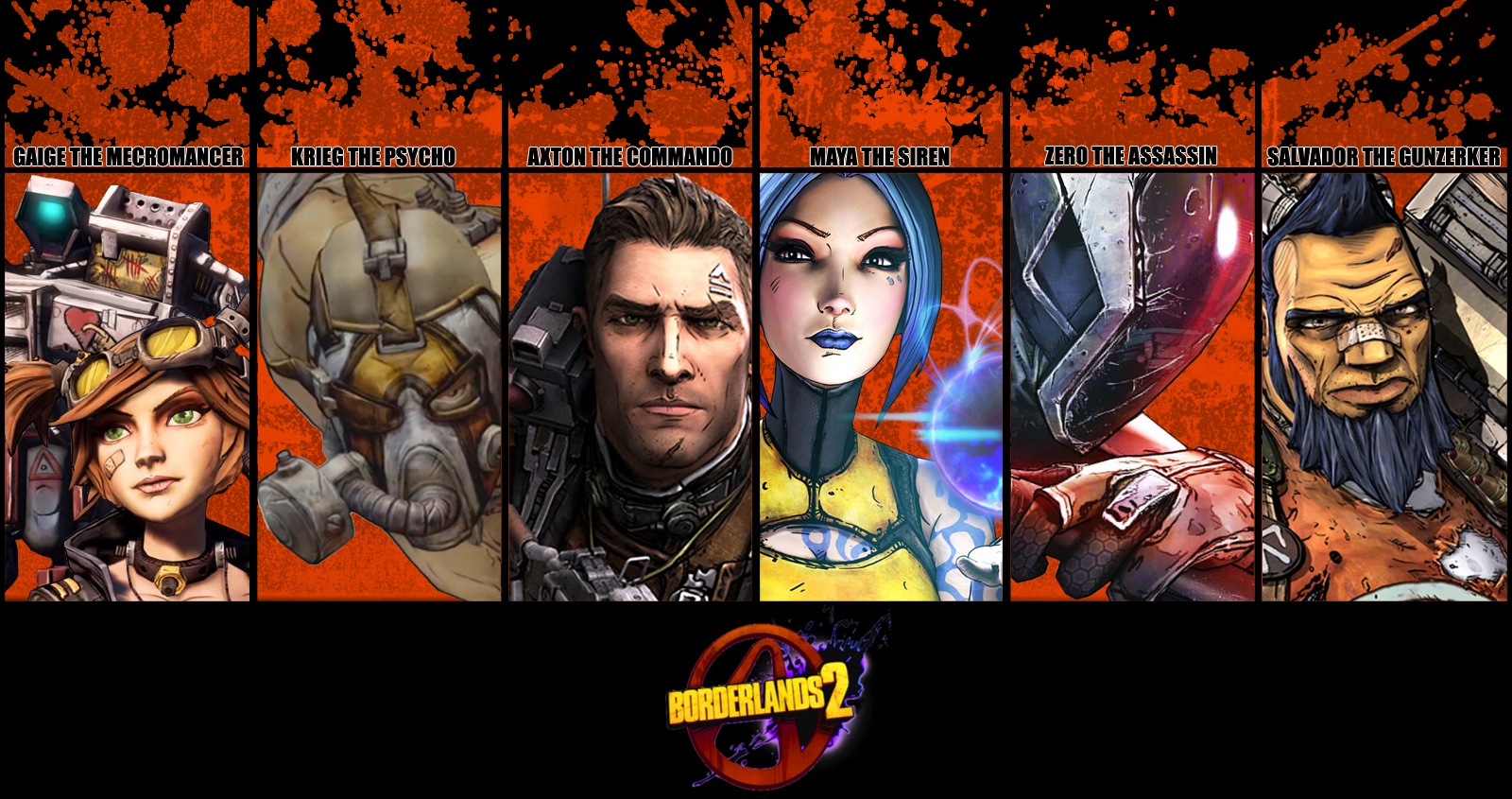
The internal turning point came when a Gearbox artist essentially locked himself in a closet and built a secret prototype using an entirely new visual approach. The result was something dramatically different — hand-drawn textures, thick black outlines, exaggerated proportions, a vivid and saturated color palette. What Gearbox called a “graphic novel style” (and what the rest of the world would broadly refer to as cel-shading) turned Pandora from a forgettable sci-fi wasteland into a living, breathing cartoon hellscape.
The concept was borrowed from a simple marketing idea: in a field of ordinary cows, the one you remember is the purple one. Gearbox’s existing art direction was a perfectly normal cow. The new direction was absolutely, unmistakably purple.
The Financial Reality of That Decision
$50 Million Is Not a Rounding Error
To understand just how bold this decision was, it helps to put that $50 million figure in perspective. The original Borderlands was not a Grand Theft Auto-scale production. Spending an additional $50 million to remake the visual identity of a game already near the finish line was, by any reasonable business standard, an act of institutional courage bordering on recklessness.
Zelnick acknowledged as much in his conversation with Senra, noting that most executives — himself included, if he’s being honest — would have defaulted to the safe play: ship what you’ve got, take the revenue, and move on. The game was done. The money was spent. The alternative was to set fire to a significant portion of the project’s budget and bet that a radically different-looking game would find an audience.
That’s exactly what happened. Borderlands launched in October 2009 and became a phenomenon. Within months, Gearbox CEO Randy Pitchford was publicly calling it a multi-million-unit franchise. The series eventually sold over 70 million copies across its lifetime, spawned three numbered sequels, a spin-off, a (rather unfortunate) feature film, and remains one of 2K Games’ most reliable properties.
A Comparable Risk in Gaming History
This isn’t the first time a major late-stage creative pivot defined a franchise. Bungie famously overhauled Halo: Combat Evolved in the months before its launch, pivoting it from a real-time strategy title to a first-person shooter. That decision, born of necessity and creative instinct, gave the world one of the defining console shooter franchises of the 2000s. The parallel to Borderlands is striking: in both cases, a willingness to blow up years of work and start a critical element over from scratch is what turned a good game into a great one.
What This Means for the Gaming Industry
The Hidden Cost of Playing It Safe
The broader lesson here isn’t simply that art direction matters — though it absolutely does. It’s that the most commercially cautious decision is often the most commercially dangerous one. In our experience covering this industry, the games that blur into the background aren’t the ones that tried something bold and failed. They’re the ones that tried nothing bold at all.
Borderlands in its original form would have shipped into a market already well-served by grimy, post-apocalyptic shooters. At the time, Fallout 3 had just redefined the genre. Resistance 2 was on shelves. Killzone 2 was months away. Another muddy-looking shooter with loot mechanics would have been noticed briefly and then quietly forgotten.
The cel-shaded Borderlands was impossible to ignore. Its visual identity did the marketing work before a single trailer aired.
What This Means for Gamers
For players, this story is a reminder that the games you love often exist in their current form due to decisions made under extraordinary pressure — decisions that could easily have gone the other way. It also quietly raises questions about how many great games were never given that chance. How many titles shipped “as is” because no executive was willing to spend $50 million to make them right?
With Borderlands 4 in active development and the franchise still very much alive, understanding the creative DNA at the franchise’s core matters. That iconic look isn’t just an art style — it’s the result of one of the gutsiest calls in AAA gaming history.
Conclusion: The $50 Million Question Every Publisher Should Ask
The Borderlands art style change remains one of the most instructive stories in modern game development. It’s a case study in what happens when a publisher actually trusts creative instinct over production schedules, and what it costs — financially and in nerve — to follow through on that trust.
Zelnick’s willingness to discuss this openly is refreshing in an industry that often prefers to present its successes as inevitable rather than the product of agonizing, expensive, sometimes irrational-sounding decisions. In our view at Dr Gamez, this is exactly the kind of transparency the industry needs more of — because the alternative is a culture where every game is shipped in its “Brown Period” because nobody wanted to write the check.
The question this story leaves us with isn’t really about Borderlands. It’s about right now: how many games currently in development are quietly suffering from their own “Brown Period,” waiting for someone brave enough to call it out — and rich enough to fix it?
Drop your thoughts in the comments below — and if you remember seeing that original grimy Borderlands reveal back in 2007, we want to hear whether you would’ve bought it.
