

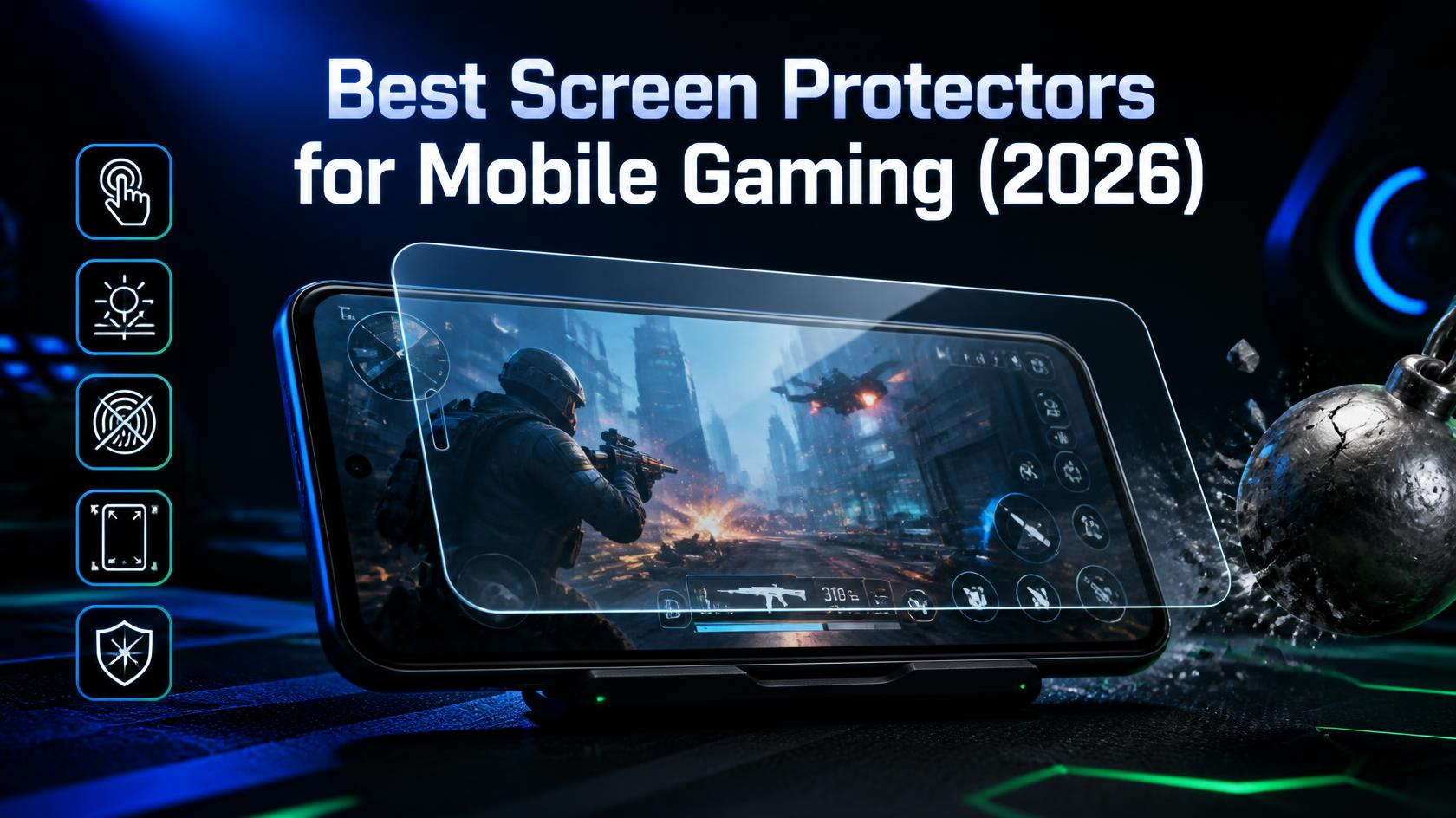
The best screen protectors for mobile gaming in 2026 aren’t the cheapest ones on Amazon or the thickest-sounding “military grade” glass. They’re the ones that get out of the way: thin enough that your phone’s touch sampling rate doesn’t choke, grippy enough that your thumbs don’t slide off during a clutch 1v4, and tough enough to survive a drop mid-match without turning into a spiderweb of cracks. I’ve gone through more protectors than I’d like to admit chasing that balance, and a handful of brands keep coming up as the ones that actually hold up for hours of touchscreen shooters, MOBAs, and rhythm games.
This list sticks to tempered glass options from brands with a track record, because thin film protectors tend to introduce a slight drag that you’ll notice the second you’re flicking a sniper scope around in something like Call of Duty: Mobile. Updated October 2026.
Why this list
A screen protector sounds like the most boring accessory you can buy for mobile gaming, but it’s arguably the one you interact with the most. Every swipe, tap, and drag goes through it. A protector that’s too thick, has a rough anti-glare texture, or isn’t calibrated for high touch sensitivity will make your inputs feel a half-step behind, and in anything competitive that’s the difference between landing a shot and eating one. I picked products here based on official specs from the manufacturers, verified retail listings, and the kind of touch-response and installation feedback that shows up consistently across player and buyer reviews rather than a single glowing testimonial. Check out our best phones for mobile gaming guide if you’re starting from scratch on the phone itself, since protector fit depends entirely on which model you’re running, and pair whichever glass you pick with a solid mobile game controller if touchscreen-only input is holding your aim back.
ZAGG InvisibleShield Glass XTR with D3O
Tempered glass with impact-absorbing D3O layer. Around $39.99–$44.99. iPhone and Samsung Galaxy flagship models.
This is the one I’d point to if you’ve ever cracked a screen mid-game and want insurance against it happening again. ZAGG builds the XTR line around D3O, a shock-absorbing material originally developed for sports padding, sandwiched into the glass itself rather than relying purely on hardness. It’s noticeably better at surviving a corner-first drop than a standard 9H glass sheet, and the surface stays smooth enough that fast swipes in fighting games or MOBAs don’t feel grabby. It also carries an antimicrobial coating, which matters more than people think once you’ve been gripping your phone through a sweaty three-hour session.
Why it’s good: real drop protection without sacrificing touch feel. Who it’s for: players who’ve already cracked a screen once and don’t want a repeat. Buy: zagg.com or Amazon.
Spigen Glas.tR EZ Fit
9H tempered glass with auto-align installation tray. Around $14.99–$19.99 for a 2-pack. Wide iPhone and Galaxy coverage.
Spigen’s EZ Fit line solved the one real problem with glass protectors: getting them on straight without trapping a dust speck under the edge. The tray clips onto your phone, you drop the glass in, and it snaps into alignment by itself. For gaming specifically, the thin profile and silky surface are what matter, since Spigen keeps the coating smooth rather than textured. It’s become something of a default recommendation across tech forums for exactly that reason, not because it’s flashy but because it just works and doesn’t dull touch response.
Why it’s good: near-foolproof install, thin enough to disappear. Who it’s for: anyone who’s fought with a bubbly, off-center protector before and never wants to again. Buy: spigen.com or Amazon.
Belkin ScreenForce UltraGlass 2
Ultra-thin 9H tempered glass, 0.29mm. Around $39.95. iPhone 14 through 17 lineups, select Galaxy models.
Belkin’s pitch with UltraGlass 2 is strength without thickness, and the 0.29mm profile backs that up. It’s one of the thinnest tempered glass options that still carries a legitimate 9H hardness rating, which is the sweet spot for gaming: thin enough that touch sampling feels native, hard enough to actually matter when the phone face-plants on concrete. Belkin also backs it with a limited lifetime warranty on cracks, which is a real cost-saver if you’re someone who goes through protectors every few months.
Why it’s good: best hardness-to-thinness ratio on this list, plus a crack warranty. Who it’s for: players who want glass-level protection but hate how “thick” most tempered protectors feel. Buy: belkin.com, Apple Store, Amazon.
ESR Armorite 3-Pack with UltraFit Tray
9H tempered glass, 3-pack, alignment tray included. Typically $13.99–$16.99. Broad iPhone and Galaxy coverage.
ESR’s whole thing is giving you more for less without actually cutting corners on the glass itself, and the Armorite 3-packs are the best example. You get three protectors for roughly what a single premium one costs elsewhere, each with the same alignment tray system and 9H rating you’d expect from a pricier single-pack. For gaming, that multi-pack format is genuinely useful: you can swap in a fresh one the moment the old one scratches or starts feeling slightly tacky, instead of babying a single $40 protector for a year.
Why it’s good: three protectors for the price most brands charge for one. Who it’s for: heavy phone users who’d rather replace often than protect one sheet forever. Buy: Amazon, esrtech.com.
amFilm OneTouch Tempered Glass
9H tempered glass, 2-pack, one-touch installation frame. Typically $8.99–$12.99. Samsung Galaxy S21 through S25 series, select other Android models.
amFilm’s OneTouch system is built specifically around the complaint most people have with glass protectors: air bubbles. The included frame holds the glass in place while you press from the center outward, and it genuinely does what it promises on most Galaxy models. It’s the budget pick here, but budget doesn’t mean a worse gaming experience. The glass itself is standard 9H tempered, with no weird texture or coating that would slow down fast taps.
Why it’s good: cheapest reliable option, bubble-free install most of the time. Who it’s for: Android gamers who don’t want to overspend on something they’ll replace anyway. Buy: Amazon.
OtterBox Amplify Glass Screen Protector
Advanced tempered glass with drop protection tested to roughly 3 feet. Around $34.95–$44.95. iPhone 14 through 17 lineups.
OtterBox earned its reputation on cases, and the Amplify line brings the same drop-tested philosophy to glass. It’s rated for drops from about three feet, which covers the realistic “phone slips off the couch arm during a match” scenario better than most competitors bother to test for. The surface is treated to resist fingerprints and smudging, which actually helps during long sessions since a greasy screen is its own kind of touch-accuracy problem.
Why it’s good: drop-tested specifically, not just hardness-rated. Who it’s for: players who game on the couch, in bed, or anywhere else a phone tends to get dropped. Buy: otterbox.com, Amazon.
FAQ
Does a screen protector actually affect touch sensitivity in games?
A bad one can. Thick film protectors or glass with a heavy anti-glare texture add a small amount of input lag and reduce how precisely the screen registers fast swipes. A thin, smooth 9H tempered glass from a reputable brand shouldn’t introduce any noticeable difference, which is why every pick on this list sticks to that category.
Is tempered glass or a film protector better for gaming?
Tempered glass almost always wins for gaming. Film protectors are thinner on paper but tend to have a slightly tacky or rubbery surface that drags under fast finger movement, and they scratch more easily, which makes that drag worse over time.
How often should I replace a gaming screen protector?
Most players notice a difference in touch feel once micro-scratches build up, usually somewhere between three and six months of regular play. That’s part of why a multi-pack like the ESR Armorite or amFilm OneTouch makes sense for anyone gaming daily.
Which one of these have you actually used, and did it hold up the way the brand claims? Let us know in the comments.
Source(s): ZAGG, Spigen, Belkin, ESR, OtterBox, retail listings via Amazon and manufacturer stores
AUTHOR TONAY
I’d personally grab the Spigen EZ Fit first just because I’m tired of fighting bubbles during install, and it’s thin enough that I genuinely can’t tell it’s there mid-match.
