

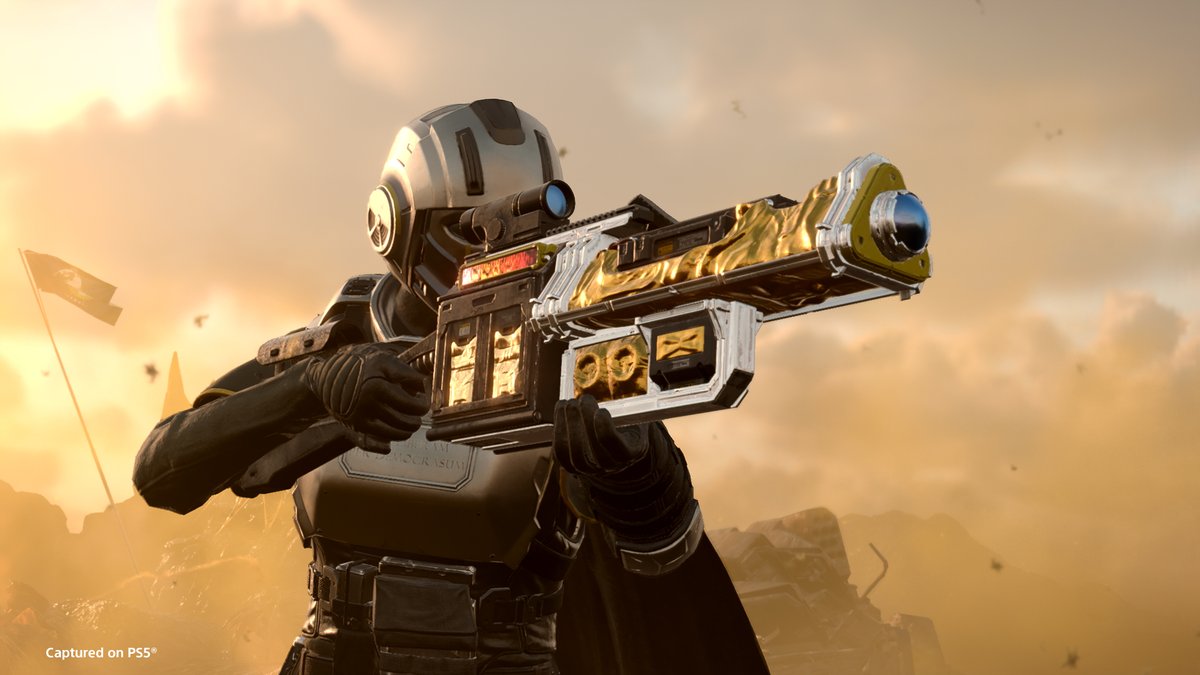
Helldivers 2 Planet Warfronts Is the Roguelite Shake-Up the Galactic War Has Always Needed
Helldivers 2 is getting a structural overhaul that could fundamentally change why players keep coming back — and it goes far beyond a new mission type. Arrowhead Game Studios has revealed Planet Warfronts, a roguelite-inspired mode that reimagines how squads engage with the Galactic War at the ground level, and if the execution matches the ambition, this could be the update that defines the game’s second chapter.
Why This Announcement Lands at Exactly the Right Moment
Helldivers 2 launched in February 2024 as one of the most surprising multiplayer hits in recent memory, peaking at over 450,000 concurrent Steam players and sparking genuine cultural conversation about live-service done right. But the second half of 2025 was rough. Performance issues, a controversial PSN account linking controversy, and a period of content drought collectively eroded the game’s player base from its peak. Arrowhead spent months stabilizing the experience before they could talk credibly about the future.
That stabilization now matters because Arrowhead is announcing growth features, not survival ones. When a studio is still in damage control, roadmap posts read like apologies. This one reads like confidence. Game director Mikael Eriksson isn’t talking about fixes — he’s talking about the game Arrowhead always wanted to build.
The timing also aligns with a broader industry moment. The live-service shooter space is more competitive than it has been in years, with games like Marathon on the horizon and Destiny 2’s long decline leaving a vocal, under-served audience hungry for a cooperative alternative. Helldivers 2 has a window to cement itself as the go-to co-op shooter for the next few years — but only if the content keeps pace with the community’s expectations.
What Planet Warfronts Actually Is
The Three-Category Mission Framework
According to the community post from Eriksson, Planet Warfronts splits into three distinct mission categories: defending liberated territory, fighting on an active frontline war, or operating behind enemy lines. Each category comes with its own set of conditions and stakes, meaning the briefing screen alone will carry meaningful narrative weight before a single boot hits the ground.
The roguelite influence is most visible in two specific design choices. First, enemy variants differ depending on where on a planet you’re operating — a city sector won’t feel the same as an outlying industrial zone, even if the underlying mission objective is similar. Second, a “game master” system introduces mid-mission modifiers, twisting elements during play to prevent squads from running the same mental playbook twice. Eriksson has confirmed that strategic locations like cities become high-value objectives with consequences attached to their liberation — including timers that create genuine pressure and reward players who coordinate rather than improvise.
What’s Already Been Teased Alongside It
Planet Warfronts doesn’t exist in isolation. Arrowhead is also adding Galactic War Campaigns later this month — an evolution of the Major Orders system that runs for one to three weeks and provides clearer stakes and better reward structures beyond just medals. Dr. Gamez has tracked this trend since Arrowhead began its post-crisis communication push in early 2026: the studio has been methodically upgrading every layer of the Galactic War loop, from top-level campaigns down to individual mission encounters. Planet Warfronts is the bottom of that pyramid, and it’s the piece that makes everything else feel grounded.
Eriksson also noted that dynamic warfronts were on the design table before the game even launched in 2024, but were shelved because the content pool wasn’t deep enough to support them. Now, two-plus years of factions, environments, enemy variants, and weapon unlocks provide exactly the raw material those systems need to feel meaningfully varied rather than superficially random.
What This Means for Players
The Replayability Problem Gets a Real Answer
Players who have already accumulated hundreds of hours in Helldivers 2 know the game’s core tension: the mission variety is wide enough to stay interesting, but the underlying structure is predictable enough that experienced squads can switch to autopilot. Planet Warfronts directly attacks that problem. The game master modifier system means that even well-coordinated veteran teams will encounter situations they haven’t pre-optimized for, which is where genuine co-op chemistry actually forms.
For newer players — the ones who joined during the Xbox Series release in August 2025 — Planet Warfronts represents the most welcoming version of the Galactic War yet. The three-category framework provides context that the existing mission system never quite delivers. “You’re behind enemy lines” is a fundamentally different emotional starting point than “secondary objective: destroy fuel silos.”
From what we’ve seen in the community, the appetite for unpredictability in Helldivers 2 is genuine. The most celebrated moments players share aren’t clean extractions — they’re the chaotic near-misses, the missions that went sideways in ways nobody planned for. A game master system that manufactures those conditions intentionally isn’t a gimmick; it’s Arrowhead formalizing what already makes their game special.
The Reward Question Still Needs Answering
One aspect Eriksson’s post did not fully address is how Planet Warfronts integrates with the existing progression economy. Helldivers 2’s reward loop has been a persistent friction point — the Super Credits system and the Warbond structure have faced consistent criticism for not adequately compensating time investment. If Planet Warfronts missions offer meaningfully better rewards for their added complexity and risk, this mode could become the primary loop for dedicated players. If they don’t, veterans will treat it as a novelty and return to the fastest XP path available. The Galactic War Campaign rewards being “more than just medals” is a promising signal, but specifics matter.
The Dr. Gamez Take
This announcement mirrors what Bungie attempted with Destiny 2’s Forsaken expansion in 2018 — a structural rethinking of the game’s core loop at a moment when the community’s patience was running thin. Forsaken succeeded because it gave long-term players a reason to re-engage with systems they’d exhausted, not just new content to consume. It reframed the act of playing, not just the stuff to play.
Planet Warfronts has the same potential, and in one crucial way it’s better positioned than Forsaken was: Arrowhead is not asking players to pay for it. Forsaken’s $40 price tag became a defining controversy for Destiny 2’s relationship with its audience. The fact that Planet Warfronts is arriving as part of the live-service update cadence removes that friction entirely.
In our experience covering live-service shooters, the studios that survive long-term are not the ones who add the most content — they’re the ones who make the existing systems feel worth returning to. Arrowhead’s design philosophy has always leaned toward emergent moments over scripted spectacle, and Planet Warfronts is that philosophy taken to its logical conclusion. The game master modifier system, the location-specific enemy variants, the tiered mission stakes — none of it is revolutionary in isolation. What’s notable is that Arrowhead is weaving all of it into the Galactic War’s existing narrative framework rather than bolting on a separate mode that players treat as optional.
The one genuine concern is scope creep. Eriksson also mentioned 8-player lobbies as a long-term ambition, and Arrowhead’s history suggests they have more ideas than bandwidth to execute them cleanly. Planet Warfronts deserves focused development attention, and it would be a mistake to let ambition dilute the rollout before this mode has established its own identity.
Where Helldivers 2 Goes From Here
Arrowhead has given themselves a realistic-to-ambitious roadmap: Galactic War Campaigns arrive later this month, with Planet Warfronts following further down the line. The sequencing is smart — campaigns give players a new sense of stakes and rewards first, so that when Planet Warfronts launches, there’s already a refreshed community actively invested in the Galactic War’s outcome.
The larger question isn’t whether Planet Warfronts will be good — the design reasoning is sound and Arrowhead’s execution track record, outside of the 2025 turbulence, is strong. The question is whether the mode will be elastic enough to hold up under long-term repetition, or whether the game master modifiers will start feeling like a known set of surprises after a few dozen runs.
When Planet Warfronts goes live, will you be building a dedicated squad loadout around the behind-enemy-lines missions, or does the frontline warfronts category feel like the more compelling starting point?
