

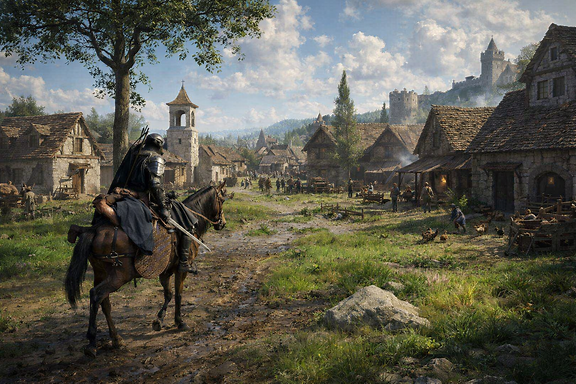
Crimson Desert Beginner Guide: How to Survive Pywel and Actually Enjoy the First Hours
Crimson Desert drops you into the continent of Pywel with almost no explanation, a combat system that punishes button mashing, and a progression structure that looks nothing like any open-world RPG you’ve played before. This Crimson Desert beginner guide covers the Abyss Artifact system, the most important early skills, combat fundamentals, and the mistakes that wall new players in the first three chapters.
This guide is written for complete newcomers and players bouncing off the game’s unusual systems in the opening hours.
What Makes Crimson Desert Different — and Why the First Hour Is Confusing
You play as Kliff, the mercenary leader of the Greymanes, navigating the war-torn politics of Pywel. The game was developed by Pearl Abyss — the studio behind Black Desert Online — and it shows. Crimson Desert is visually spectacular, mechanically dense, and almost aggressively reluctant to explain itself.
The most important thing to understand immediately is that Crimson Desert has no traditional leveling system. There is no XP bar. You don’t gain stats by killing enemies and watching numbers tick up. Instead, everything runs through the Abyss Artifact system — a completely different approach to character progression that the game introduces briefly and then leaves you to figure out on your own.
Two additional characters join Kliff as the story progresses: Damiane in Chapter 3 and Oongka in Chapter 7. All three characters share the same Abyss Artifact pool, so every point you spend carries weight from the very beginning.
The Three Stats You’re Actually Building
Crimson Desert’s skill tree splits across three branches. Red nodes build Stamina — your dodge resource, sprint capacity, and traversal abilities like gliding and swimming. Blue nodes build Health — raw survivability and HP ceiling. Green nodes build Spirit — the resource pool for your stronger abilities and skills.
In our experience with Crimson Desert, new players spread points across all three branches immediately and end up survivable at nothing. The correct approach is to push Health and Stamina to roughly level 4–5 before touching Spirit at all. Survivability and stamina economy define the early game far more than flashy abilities.
The Abyss Artifact System — How Progression Actually Works
Abyss Artifacts are the currency of Crimson Desert’s progression. You earn them by defeating enemies — a bar on the left of the minimap fills as you fight, and completing it rewards one Artifact — and by completing quests, defeating bosses, and finding Sealed Abyss Artifacts scattered across the map.
Sealed Abyss Artifacts are the most important early resource most players walk straight past. They appear as purple icons on your minimap. When you pick one up, it unlocks a challenge listed in your Journal. Complete the challenge and you receive a free Artifact. There are 141 Sealed Abyss Artifacts in the game, and finding them as you explore is far more efficient than grinding combat for the meter fill.
Use the Blinding Flash ability to spot Sealed Abyss Artifacts in your area — it highlights blue lights in the surrounding environment that indicate artifact locations, puzzle triggers, and Abyss Nexuses. The game never tells you this. It’s one of the most useful early-game mechanics and it’s completely invisible unless you experiment.
Spending Artifacts: What to Prioritize First
The temptation to spend Artifacts on Spirit skills early is real — the abilities look impressive. Resist it. Dr Gamez has tested multiple early-game approaches across playthroughs, and the players who invest in Keen Senses first have consistently smoother experiences through Chapters 1 to 4.
Keen Senses unlocks Dodge at level 2 and the i-frame Counter at level 3. The i-frame Counter is the single most powerful early-game tool — it lets you turn a perfectly timed dodge into a punishing counter-attack. Without it, fights against grouped enemies and early bosses like the Crowcaller feel much harder than they need to be. Forward Slash is the second priority for heavy attack damage. Everything else comes after.
Combat Fundamentals — This Is Not a Hack-and-Slash
Crimson Desert’s combat is built around timing, spacing, and reading enemy behavior rather than combo execution. Overextending attacks gets you punished. Patience gets rewarded.
The mistake that ends most first sessions is treating combat like an action game where you press attack until things die. Against standard enemies in Hernand you can usually get away with this. From Chapter 2 onward, enemies have distinct attack patterns and punish windows — commit to a full combo at the wrong moment and you’ll take a heavy hit mid-animation.
Learn the parry timing before anything else. Crimson Desert’s parry window is generous by soulslike standards — it’s designed to be used, not feared. A successful parry staggers most enemies and opens a free punish window that deals significant damage. In the early game, parry into heavy attack is more reliable than any combo chain you can assemble before you’ve spent Artifacts on your core skills.
Weapon Choice and What It Changes
Weapon types in Crimson Desert don’t just change damage numbers — they change how combat feels entirely. Swords offer fast, mobile attack strings with good crowd control. Spears provide range and keep Kliff safer against large enemies. Greatswords hit hard but commit you to slower animations. Axes deal heavy damage with shorter range.
From what we’ve seen most players struggle with, the tendency to switch weapons constantly in the first few hours creates confusion rather than flexibility. Pick one weapon type and learn its timing. The combat system rewards pattern recognition built around a single tool far more than it rewards constant switching.
Exploration Priorities — What to Do When the World Opens Up
Crimson Desert’s first region, Hernand, is a tutorial zone with low enemy difficulty. Use it aggressively. Every group of bandits you encounter is an opportunity to fill the Artifact meter and complete Combat Challenges — small objectives tied to your equipped weapon that reward additional Artifacts when completed. Check your active Combat Challenges regularly and adjust how you fight to complete them efficiently.
The minimap is your most important navigation tool and new players largely ignore it. Purple box icons are Sealed Abyss Artifacts. Quest markers are obvious. Less obvious is that the Notifications section in the main menu tracks everything that’s appeared on screen — completed objectives, new knowledge entries, and discovered mechanics. When you feel lost or unsure what you’ve missed, open Notifications and review it.
Don’t overextend exploration before unlocking advanced traversal abilities. Certain areas of Pywel are designed for players with gliding, flight, and Damiane’s double jump. Pushing into vertical environments early drains Stamina quickly and leads to frustrating dead ends. Complete story missions in Hernand to unlock the traversal tools that make open-world exploration feel fluid, then branch outward.
Crimson Desert Beginner Guide: Build the Foundation Before the Adventure
Crimson Desert is one of the most ambitious action-adventure games of 2026 — and one of the most rewarding once its systems click into place. Prioritize Health and Stamina Artifacts before Spirit, unlock Keen Senses as your first major skill investment, and use the Blinding Flash to find Sealed Artifacts the game never highlights for you. Learn the parry, pick one weapon, and fight every group of bandits you encounter in Hernand.
The wall that stops most players is impatience — trying to do everything before the tools to do everything have been unlocked. Follow the story missions in the early chapters, build your Artifact foundation, and Pywel opens into one of the most impressive open worlds released this generation.
Which system tripped you up most in your first hours — the Abyss Artifacts, the combat parry timing, or figuring out where to go next?
